
Storm Damage in Brownstown, IN
Wind driven rain at Brownstown windows and doors, traced through the wall and dried to match your dry rooms.
Brownstown Water Restoration is the Brownstown call for Storm Damage: emergency crews around the clock, moisture readings instead of guesswork, and insurance files built properly. Call (812) 515-1567.
- Service: Storm Damage for Brownstown homeowners
- Service area: Brownstown, IN and surrounding areas
- Response time: Rapid emergency dispatch for Brownstown inquiries; crews available 24/7
- Licensed and insured (License #RC21100059)
- Serving Brownstown, IN since 2018
Storm Damage Cleanup in Brownstown
We handle storm damage cleanup across Brownstown, from tarping the opening to drying the house underneath it, and we're out day or night.
Storms Here
The White River has a history of flooding. If your insurance company asks for a storm date, NWS Indianapolis keeps a list of past events.
Where Storm Water Ends Up
Homes near the White River and the East Fork White River can see rising water after heavy rain. With full basements common here, a big storm can bring water in from below as well as through the roof. That makes it a basement flooding job too.
After a storm we can be anywhere in Brownstown, from Poplar Cove to the roads around Brownstown Public Library and the Jackson County Courthouse. We also handle storm damage in Medora, Seymour, Norman and Cortland.
Expert Storm Damage for Brownstown Homeowners
Once the water drains out of a finished basement, the room looks like it's recovering, but the carpet pad is still saturated and the drywall keeps wicking moisture up the wall above the old waterline. The framing behind it dries slowest. Brownstown Water Restoration measures all of it on storm calls in Brownstown so you know what dried and what didn't.
Wet insulation decides a lot on a storm job. Soaked fiberglass holds water against the ceiling board, and blown in cellulose mats down and stays flat. Brownstown Water Restoration removes it when the readings call for it, records the type, depth and square footage, and puts back insulation that matches what your Brownstown home had before the storm.
Water that came in at grade gets pumped and extracted before any drying equipment goes in. Crews run portable or truck mounted extraction over hard floors, pull carpet pad where it's saturated, and detach carpet to reach the subfloor underneath. Water from outside carries soil, so the crew sets up containment and applies an antimicrobial once the soaked material is out.
Storm water claims turn on two questions, which are what opened the building and how far the water went. Brownstown Water Restoration documents both from the first visit on Brownstown jobs, with photos of the entry point before the tarp goes on, moisture readings by room, and a scope that follows those readings. You keep that record and decide with your insurance company how to use it.
Floodwater in your basement or garage calls for containment and protective gear, so it's worth a call before anyone wades in. Brownstown Water Restoration extracts the water in Brownstown and dries the structure afterward, with the soaked porous materials removed and photos at each stage. Call (812) 515-1567 to get a crew started.
Signs You Need Storm Damage Restoration
If you notice any of these in your Brownstown home, schedule a free inspection before the issue worsens.
Paint or texture blistering along the top of an exterior wall after a windy storm
A wet soffit or ceiling corner on a covered porch after wind pushed rain up under the eave
Furnace or water heater base sitting in water after storm runoff
Drywall below a window that feels soft or crumbles when pressed
A brown or yellow ring on a ceiling that got noticeably bigger after the last heavy rain
Damp, earthy air when you open the attic hatch or pull the attic ladder down
Water dripping from a ceiling light fixture or running down the canopy of a ceiling fan
Dark streaks running down an interior wall from the ceiling line toward the baseboard
Silt left on the garage floor or mudroom tile after runoff pushed in
Standing water in the track of a sliding patio door after a storm
How Brownstown Water Restoration Handles Storm Damage
We follow these steps in order on every Brownstown job.
Emergency Stabilization
Tarp, shrink wrap or board up goes over the opening the storm made, photographed before and after. Stopping the ongoing intrusion is what lets the drying numbers hold. Details of the opening get passed to whoever's handling the permanent roof or siding repair.
Moisture Mapping
Thermal imaging and penetrating meters cover every room under and beside the intrusion, plus baseline readings in unaffected areas of the same house. The map shows how far water tracked through framing and insulation, and it's what decides which surfaces get opened.
Wall Cavity Inspection
Baseboards and window trim come off where readings run high, and small inspection holes show whether the cavity behind them holds water. Windows and doors that took wind driven rain usually leave the wall base wet first.
Clearance Verification
Final moisture readings are taken on every affected material at the same marked locations and compared against the unaffected baseline recorded at the start. Equipment comes out once that comparison's documented, containment follows, and the verification sheet goes into your file.
Reconstruction and Finish Work
Insulation goes back to the recorded depth, ceiling board gets hung, taped and finished, texture is matched to the existing surface, then paint, trim, flooring and anything else that came out. The rebuild follows the measurements taken during the drying.
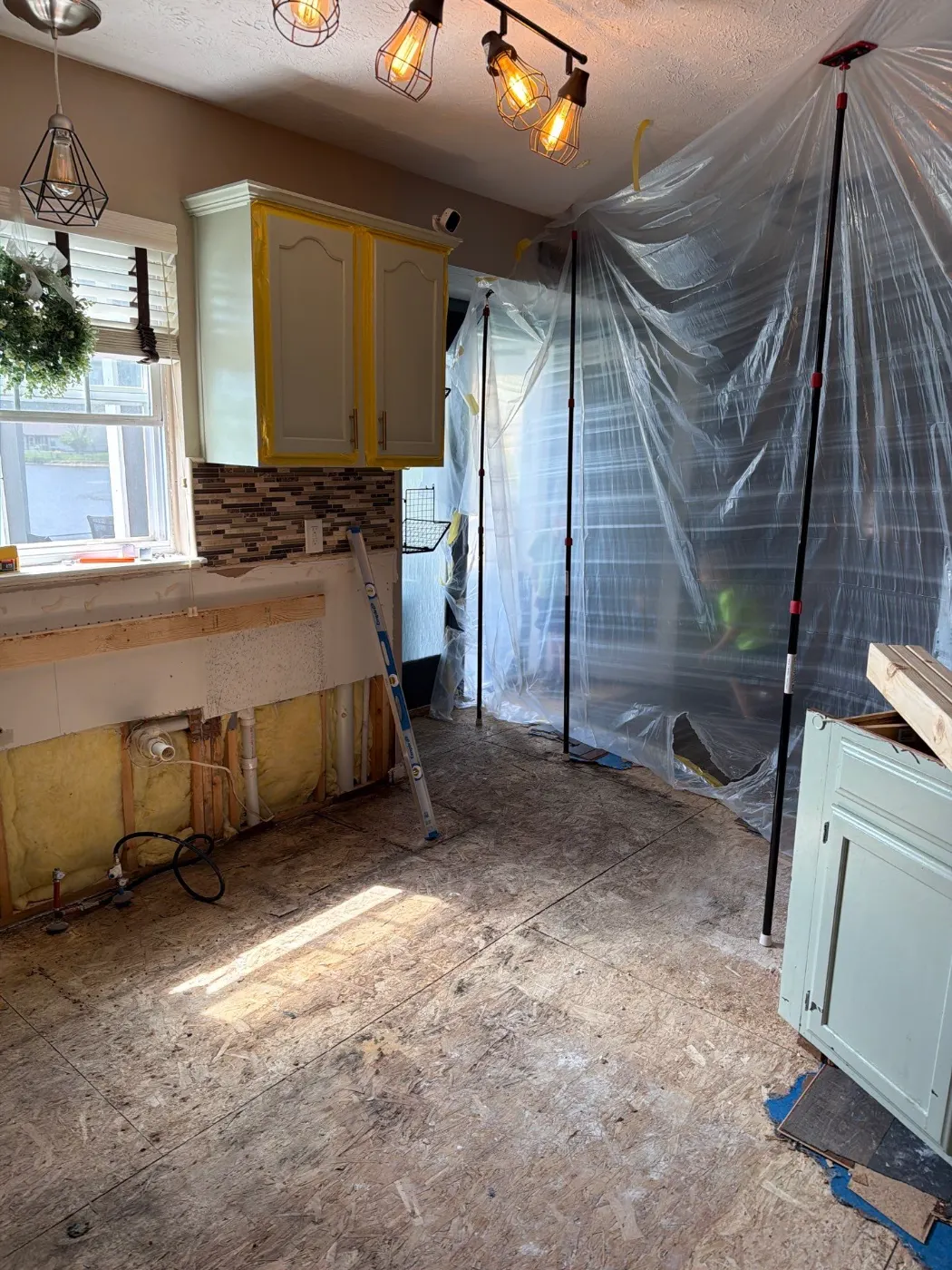
Storm Damage in Brownstown
Photographs from real storm damage jobs completed by our crew in Brownstown and surrounding areas.



Storm Damage FAQ
Questions Brownstown homeowners ask us about storm damage restoration.
Guidance and Standards for Storm Damage
- The National Weather Service office in Indianapolis posts summaries of recent central Indiana storm and flood events. NWS Indianapolis Event Summaries
- The Indiana Department of Insurance advises against permanent repairs before your insurance company inspects the damage. Check your own policy for what it covers. Indiana Department of Insurance: Insurance Claim Tips
Brownstown Neighborhoods We Serve
We take storm damage calls in every part of Brownstown. Pick your neighborhood for local details.
Other Restoration Services in Brownstown
Brownstown Water Restoration handles the full scope of restoration work. Explore our other services below.
Water Damage Restoration in Brownstown
24/7 emergency response. IICRC certified water restoration from extraction to full dry out.
Learn more →Basement Flooding in Brownstown
Basement water emergencies handled fast. Extraction, drying, mold prevention.
Learn more →Sewage Cleanup in Brownstown
Category 3 biohazard cleanup. Full containment, decontamination, structural restoration.
Learn more →Request Storm Damage Restoration
Reach Us Directly
Our team is available 24/7 for emergencies and ready to schedule inspections during business hours.
Need Immediate Help?
For active water or mold emergencies, call us directly. We are available 24/7.