
Commercial Flood Damage Cleanup in Brownstown, IN
Category 3 floodwater handled with containment and protective gear in Brownstown commercial buildings, then dried to measured readings.
Need Commercial Flood Damage Cleanup in Brownstown? Brownstown Water Restoration answers 24/7 with certified crews, fast on-site response, and documentation built for your insurance claim. Call (812) 515-1567 now.
- Service: Commercial Flood Damage Cleanup for Brownstown homeowners
- Service area: Brownstown, IN and surrounding areas
- Response time: 24/7 answering with priority emergency dispatch across Brownstown
- Licensed and insured (License #RC21100059)
- Serving Brownstown, IN since 2018
Commercial Flood Cleanup in Brownstown
We handle commercial flood cleanup across Brownstown, and we'll start with the areas your business needs back first.
Flood Exposure Here
Flood risk here runs highest for sites close to the White River and the East Fork White River. The White River has a flood history that nearby sites should plan around. Your building's own flood exposure gets mapped when we walk the site with your facilities contact.
Our flood crews work commercial sites throughout Brownstown, including the blocks around Brownstown Central High School and Brownstown Public Library. We also handle commercial flood cleanup in Seymour, Norman, Cortland and Crothersville.
Commercial Flood Damage Cleanup for Brownstown Businesses
High groundwater in low parts of Indiana can push water up through slab joints and floor drains even when nothing has overflowed outside. A sump pit that loses power during a storm lets the level climb fast. Brownstown Water Restoration handles commercial flood damage in Brownstown when groundwater and surface water have both reached the lower level, and treats that water as contaminated until the crew knows otherwise.
Brownstown Water Restoration handles the rebuild on commercial flood losses once the readings clear, from drywall and flooring to ceiling tile, millwork and dock seals. The rebuild scope comes from the documented tear out, so what goes back matches what came out of your Brownstown building. You approve it in writing, and it can run by zone so sections reopen in order.
The air handling system matters to the drying plan. Air handlers that ran during the loss have already moved humid air into clean space, so the crew works with building engineering to isolate the affected zones and set the system where it helps the drying. Ductwork, duct insulation and units that sat in water need a look from your HVAC contractor before anything goes back into service.
Flood policies and property policies each set their own notice requirements, and proof of loss paperwork can carry short deadlines. Report the loss as soon as the water is under control, and ask the carrier to confirm every deadline in writing. Brownstown Water Restoration supplies the photographs and readings for your Brownstown property that the paperwork draws on.
A storm that floods one of your Brownstown properties often floods others. Call Brownstown Water Restoration about each address and name a contact at each building, so every property gets its own crew plan and its own file. The crew then knows who to ask for on arrival.
Signs You Need Commercial Flood Damage Cleanup
If you notice any of these in your Brownstown building, schedule a free inspection before the issue worsens.
An adjuster or lender asking for moisture readings and photographs of the flood damage
Mechanical room under water, with floodwater around the boiler or the air handler
Wet insulation hanging out of a wall cavity after floodwater passed through
Acoustic ceiling tiles stained brown or sagging out of the grid in a line under a pipe run
A discharged sprinkler head with ceiling tiles collapsed or sagging in the grid below it
A damp dark band across the concrete slab that spreads overnight and shrinks during the day
Silt packed into trench drains and floor drains after a flood
Water tracking in from under a loading dock door, leaving a silt line across the slab
Standing water visible across more than one bay or section of a warehouse or retail floor
Visible water or damp conduit inside an electrical room, or a panel with moisture at the base
How Brownstown Water Restoration Handles Commercial Flood Damage Cleanup
We follow these steps in order on every Brownstown job.
Two Hour Dispatch
Brownstown Water Restoration dispatches a commercial crew to the property within two hours of the call, day or night. The truck arrives loaded with submersible and trash pumps, truck mounted extraction, dehumidification, air movers, moisture instruments, and containment material for the square footage reported on the phone.
Mud and Silt Removal
Mud goes into containers first, starting at the far end of the building and working toward the exit. Wet vacuums and a rinse pass follow, and floor drains get flushed and checked so water can drain freely.
HVAC Coordination
The crew works with building engineering to set the air handlers where they support drying and keep humid air out of unaffected areas. Ductwork and units that sat in water get flagged for your HVAC contractor to check before the system goes back into service.
Daily Documentation
Moisture readings, temperature and humidity logs, equipment counts by room, and photographs get recorded every day equipment runs. Affected materials get compared against dry standard readings taken elsewhere in the same building, so the file shows a drying trajectory an adjuster can follow.
Closeout File and Repair List
You receive the photographs, readings, equipment logs and disposal records in one file, along with a list of what was removed room by room. The people doing the repairs can scope from that list.
Commercial Flood Damage Cleanup in Brownstown
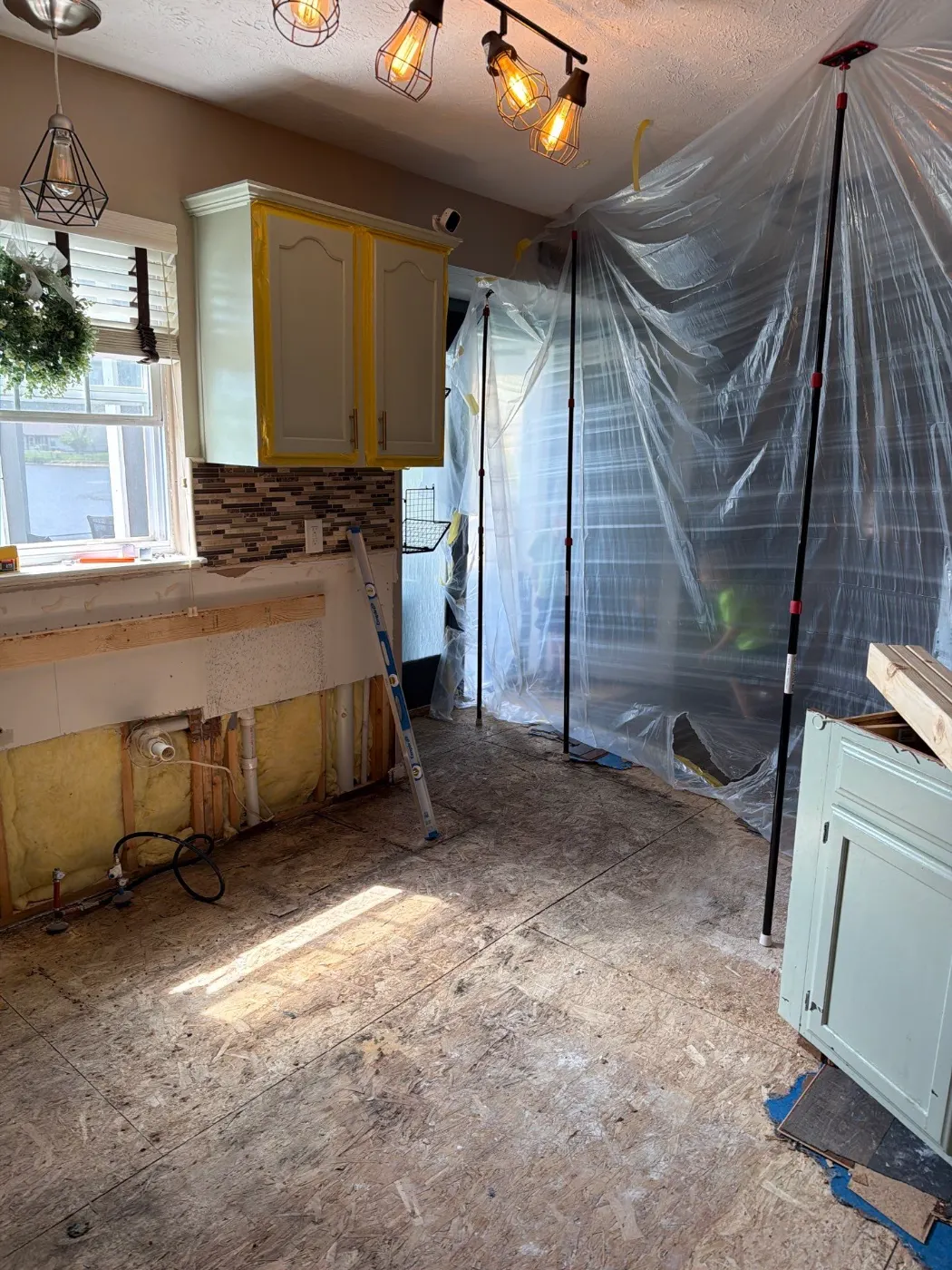
Photographs from real commercial flood damage cleanup jobs completed by our crew in Brownstown and surrounding areas.



Commercial Flood Damage Cleanup FAQ
Questions Brownstown property managers ask us about commercial flood damage cleanup.
Guidance and Standards for Commercial Flood Damage Cleanup
- The ANSI/IICRC S500 is the published standard for professional water damage restoration. The current edition is the Fifth Edition, 2021. IICRC S500 Standard
- EPA advises drying water damaged areas and items within 24 to 48 hours to prevent mold growth. EPA: A Brief Guide to Mold, Moisture and Your Home
Brownstown Neighborhoods We Serve
We take commercial flood damage cleanup calls in every part of Brownstown. Pick your neighborhood for local details.
Other Restoration Services in Brownstown
Brownstown Water Restoration handles the full scope of restoration work. Explore our other services below.
Water Damage Restoration in Brownstown
24/7 emergency response. IICRC certified water restoration from extraction to full dry out.
Learn more →Basement Flooding in Brownstown
Basement water emergencies handled fast. Extraction, drying, mold prevention.
Learn more →Sewage Cleanup in Brownstown
Category 3 biohazard cleanup. Full containment, decontamination, structural restoration.
Learn more →Request Commercial Flood Damage Cleanup
Reach Us Directly
Our team is available 24/7 for emergencies and ready to schedule inspections during business hours.
Need Immediate Help?
For active water or mold emergencies, call us directly. We are available 24/7.