
Sewage Cleanup in Brownstown, IN
Sewage cleanup in Brownstown from the waste extraction through the finished drywall and paint, with photos at every step
Searching for Sewage Cleanup near Brownstown? Brownstown Water Restoration dispatches 24/7, documents everything, and works with your insurance carrier from first call to final walkthrough. Call (812) 515-1567.
- Service: Sewage Cleanup for Brownstown homeowners
- Service area: Brownstown, IN and surrounding areas
- Response time: 24/7 live dispatch; emergency crews prioritized for Brownstown
- Licensed and insured (License #RC21100059)
- Serving Brownstown, IN since 2018
Sewage Backup Cleanup in Brownstown
When sewage backs up into a home in Brownstown, we'll contain the area first and then remove the contaminated material.
Sewer Lines Here
Older sewer lines in parts of Brownstown raise the backup risk.
When Backups Happen
Heavy rain can overload the sewer lines here and push sewage back into basements.
We work in every corner of Brownstown, including The Boulevards and the blocks around Jackson-Washington State Forest and Brownstown Public Library. Nearby, we handle sewage backups in Seymour, Norman, Cortland and Crothersville.
Expert Sewage Cleanup for Brownstown Homeowners
What a sewage backup in Brownstown ends up costing gets decided in the first day, because contaminated water keeps moving into material that was dry when you found it. Carpet cushion, baseboard and the bottom of the drywall come out either way. What's still in question is the framing, the subfloor and the room above, and that depends on how fast the water comes out.
Septic backups get a two part plan. A septic contractor works on the tank and the field outside, and the cleanup crew works on the house. Inside your Brownstown home the method is the same as for any Category 3 loss, and the work begins once the flow into the house has been stopped.
Drying a wall after sewage cleanup starts with open cavities. With the lower drywall and insulation gone, the studs and the bottom plate are exposed, and air movers aimed along the wall carry moisture off them while dehumidifiers pull it out of the room. The crew reads those framing members in your Brownstown home each visit and moves the air movers as they dry.
If containment makes part of your Brownstown home unusable for a few days, that may sit under the loss of use coverage on your policy, and your carrier is the one to ask about it. Brownstown Water Restoration documents which rooms were under containment and for how long, because dates are what that part of a claim runs on. Those dates go into your photo report with the readings and the photographs.
Keep the door to that room closed and call Brownstown Water Restoration. Dispatch to Brownstown runs within 2 hours, the crew brings the respirators, suits and negative air equipment a sewage job requires, and the removal gets photographed and measured as it happens so the claim file matches what came out of the house.
Signs You Need Sewage Cleanup
If you notice any of these in your Brownstown home, schedule a free inspection before the issue worsens.
Neighbors on the same street reporting sewer backups on the same day as yours
Greasy black film left on the floor after standing water goes back down the drain
Baseboard swelling and paint blistering in a band a few inches above the slab
Laminate or vinyl plank flooring lifting at the seams after a toilet overflowed with waste
Sewage smell strongest along one wall where the drain line runs behind the drywall
A line of unusually green, soft grass running across the yard above the sewer lateral
Water pushing up through the shower pan when an upstairs toilet gets flushed
A plumber's camera finding a collapsed or offset section of the lateral under the slab
A tide line and staining on basement drywall a few inches above the floor
Sewage odor in the basement that gets stronger after a load of laundry or a long shower
How Brownstown Water Restoration Handles Sewage Cleanup
We follow these steps in order on every Brownstown job.
Scope Review
Once the readings are in, the crew walks you through the written scope. It lists each material proposed for removal and the reason for it, plus the cut lines the meters support, and nothing comes off the wall until you've seen it.
Contents Sorting
Belongings in the room get sorted before the removal work starts. Anything the water reached is photographed and listed before it goes into bags, and hard goods that can be cleaned are set aside for separate cleaning.
Ceiling and Cavity Opening
Where the water traveled down or into a wall, the crew opens the ceiling or the wall cavity until the readings come back dry. Wet insulation comes out, and the exposed framing is photographed before it gets cleaned.
Daily Moisture Checks
A technician returns each day while equipment runs, taking readings at the same marked points and moving the air movers as the wet area shrinks. The numbers go in a log that shows the trend toward the dry reference.
Clearance Verification
Final moisture readings go on every affected material against an unaffected baseline elsewhere in the house. Cleaned surfaces get inspected, the sealed space gets an odor check with the scrubbers off, and containment comes down once the verification is written up.
Sewage Cleanup in Brownstown
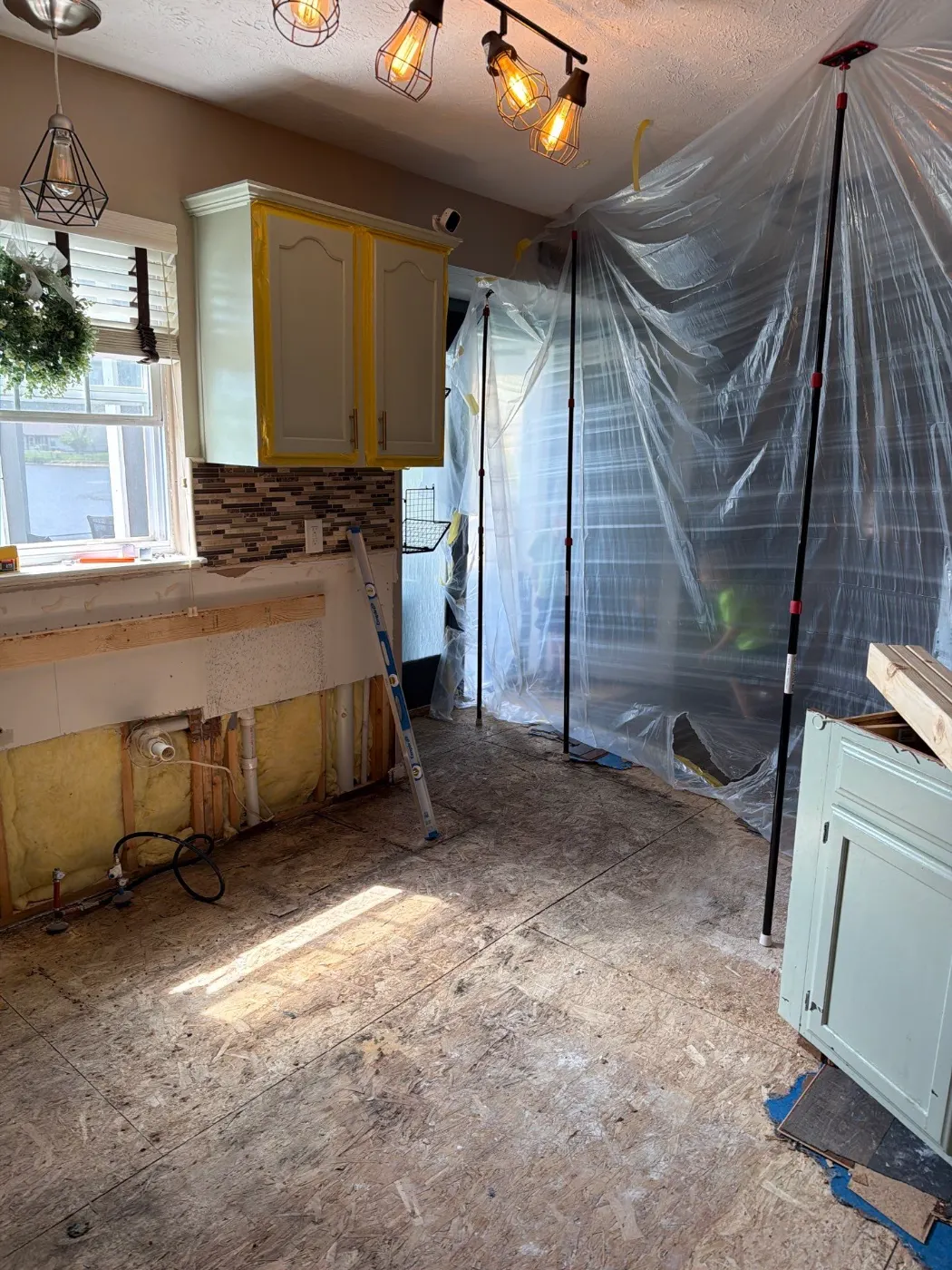
Photographs from real sewage cleanup jobs completed by our crew in Brownstown and surrounding areas.



Sewage Cleanup FAQ
Questions Brownstown homeowners ask us about sewage cleanup.
Guidance and Standards for Sewage Cleanup
- The ANSI/IICRC S500 is the published standard for professional water damage restoration. The current edition is the Fifth Edition, 2021. IICRC S500 Standard
- The Indiana Department of Insurance advises against permanent repairs before your insurance company inspects the damage. Check your own policy for what it covers. Indiana Department of Insurance: Insurance Claim Tips
Brownstown Neighborhoods We Serve
We take sewage cleanup calls in every part of Brownstown. Pick your neighborhood for local details.
Other Restoration Services in Brownstown
Brownstown Water Restoration handles the full scope of restoration work. Explore our other services below.
Water Damage Restoration in Brownstown
24/7 emergency response. IICRC certified water restoration from extraction to full dry out.
Learn more →Basement Flooding in Brownstown
Basement water emergencies handled fast. Extraction, drying, mold prevention.
Learn more →Storm Damage in Brownstown
Storm related water emergencies. Tarping, extraction, drying, and full restoration.
Learn more →Request Sewage Cleanup
Reach Us Directly
Our team is available 24/7 for emergencies and ready to schedule inspections during business hours.
Need Immediate Help?
For active water or mold emergencies, call us directly. We are available 24/7.