
Commercial Storm Damage in Brownstown, IN
Occupied buildings dried without closing the floor. Brownstown Water Restoration answers commercial storm intrusion in Brownstown day or night.
Commercial Storm Damage in Brownstown, IN starts with one call to Brownstown Water Restoration: live 24/7 dispatch, IICRC certified response, and honest written scopes before work begins. Call (812) 515-1567.
- Service: Commercial Storm Damage for Brownstown homeowners
- Service area: Brownstown, IN and surrounding areas
- Response time: Around the clock dispatch; Brownstown emergencies move to the front of the line
- Licensed and insured (License #RC21100059)
- Serving Brownstown, IN since 2018
Commercial Storm Damage Cleanup in Brownstown
We'll secure and dry commercial buildings in Brownstown after a storm opens the roof or floods a lower level.
Storms Here
The White River has a flood history that nearby sites should plan around. NWS Indianapolis posts summaries of past storms, which helps when your carrier asks for a date.
We respond to storm calls from businesses anywhere in Brownstown, including those around Brownstown Central High School and Brownstown Public Library. We also handle commercial storm damage in Norman, Cortland, Crothersville and Vallonia.
Commercial Storm Damage for Brownstown Businesses
Wind lifts a corner of the membrane, rain drives in under it for a few hours, and by morning the insulation in the roof assembly is holding water that has nowhere to go. That water keeps releasing into the deck and the ceiling below for days. Brownstown Water Restoration dispatches to Brownstown, IN commercial properties within two hours to dry in the opening and pull readings through the assembly and the floors underneath.
Storm water in a commercial building usually comes through the roof, so Brownstown Water Restoration reads the roof assembly and every floor under the breach. Readings come off the insulation, the deck and the gypsum, then down the column lines and partitions where the water tracked. Every reading gets keyed to a floor plan of your Brownstown building, so the scope covers what the water reached.
When a rooftop unit curb leaks, the duct below it becomes part of the job. The crew checks the supply and return runs for wet lining and dries the ceiling space the duct crosses. Replacing damaged duct lining is a call for your HVAC contractor, and Brownstown Water Restoration shares the moisture readings with them at your Brownstown property.
Commercial mitigation scopes from Brownstown Water Restoration get written in the line item format adjusters already work in. The scope is built off measured affected area, the drying equipment the readings justified and the labor the work took. If anybody questions a line, the readings and the photos behind it are in the same file, and you decide with your carrier what happens next.
If the storm hit overnight and your Brownstown building is sitting wet, call Brownstown Water Restoration, whatever the hour. Tell the team whether water is still coming in and who holds the keys, and the crew plans the first visit around those two answers.
Signs You Need Commercial Storm Damage Restoration
If you notice any of these in your Brownstown building, schedule a free inspection before the issue worsens.
Fresh brown rings on ceiling tile directly under an interior roof drain line
Standing water ponding on the roof more than two days after the rain stopped
Water dripping from a light fixture, an air diffuser, or a sprinkler escutcheon after a hard rain
Floor boxes near the glass line with corrosion or standing water inside
Window sills or curtain wall mullions holding water on the inside face after wind driven rain
Floor drains or cleanouts that gurgle or push water up during a heavy rain
Corrosion on a fire sprinkler line or head where the pipe runs close to the roof deck
Damp, darkened flooring in a band just inside the main entrance after a windy rain
Breakers tripping in a mechanical room or electrical room that sits under a roof penetration
A roof drain or scupper running slow, gurgling, or ringed with debris and sediment
How Brownstown Water Restoration Handles Commercial Storm Damage
We follow these steps in order on every Brownstown job.
Emergency Roof Dry in
The membrane breach or failed detail gets covered with a temporary dry in built to hold through the next rain. Photos go in the file before and after. The permanent repair stays on the work order until a roofing scope takes it over.
Occupied Space Planning
Suites and corridors that must stay in service get marked on the plan before any equipment is staged, along with where the barriers go. The loud work is scheduled for hours when the space is empty.
Structural Drying Setup
Dehumidification is sized to affected cubic footage, desiccant for open floor plates and refrigerant units for enclosed suites. Air movers go in at calculated angles. The crew checks available amperage and brings distribution or generator power when building panels can't carry the load.
Daily Readings Logged
Each day brings temperature, relative humidity and material moisture readings logged against an unaffected baseline elsewhere in the building. Equipment moves based on what the numbers show. The property manager gets the readings and the photos the same day.
Closeout File and Walkthrough
A walkthrough with the property manager closes the job, and the crew hands over one organized file with the photos, the readings, the equipment run hours and the scope. Ownership and the carrier's reviewer can read it start to finish.
Commercial Storm Damage in Brownstown
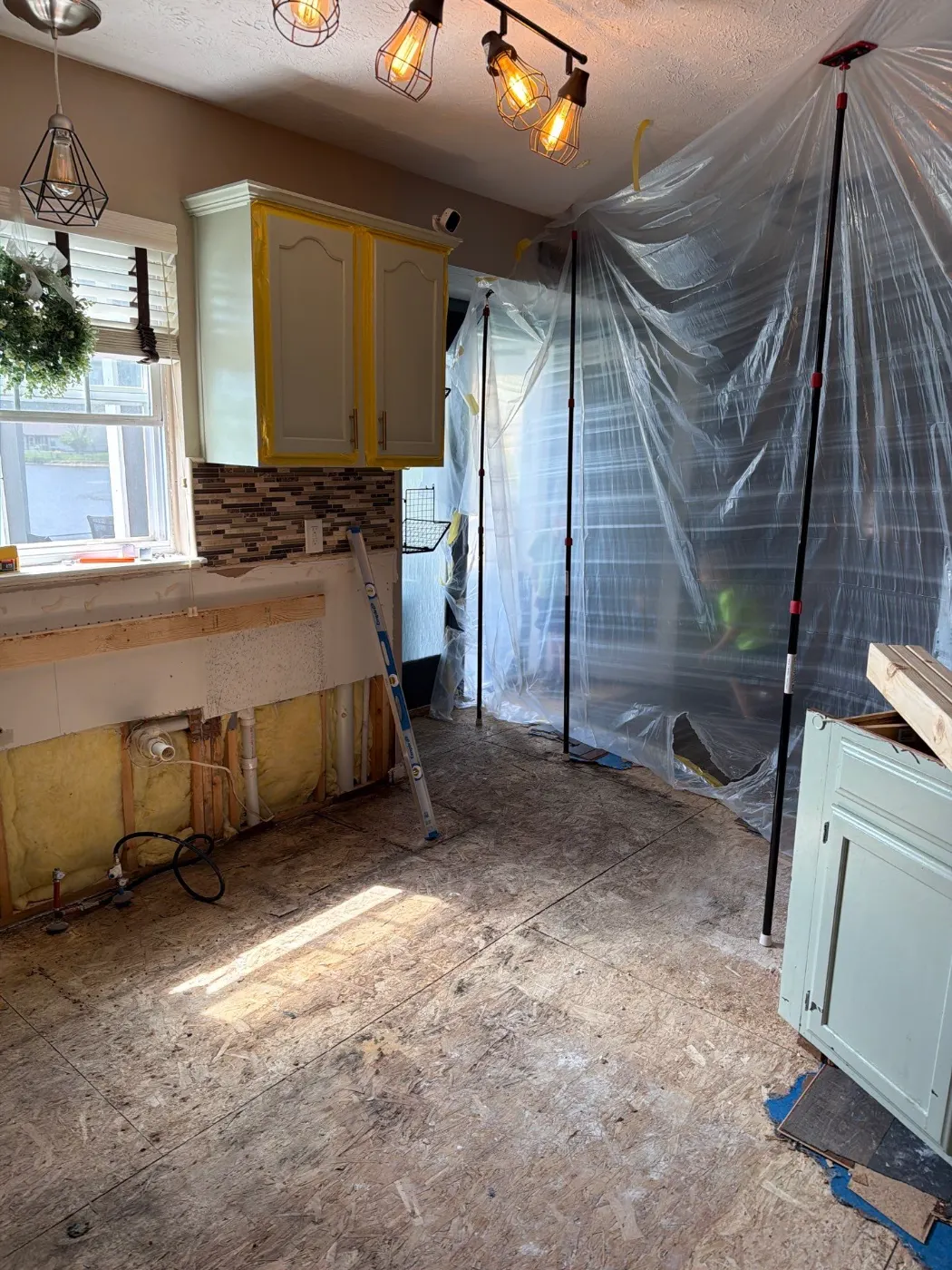
Photographs from real commercial storm damage jobs completed by our crew in Brownstown and surrounding areas.



Commercial Storm Damage FAQ
Questions Brownstown property managers ask us about commercial storm damage restoration.
Guidance and Standards for Commercial Storm Damage
- The National Weather Service office in Indianapolis posts summaries of recent central Indiana storm and flood events. NWS Indianapolis Event Summaries
- The ANSI/IICRC S500 is the published standard for professional water damage restoration. The current edition is the Fifth Edition, 2021. IICRC S500 Standard
Brownstown Neighborhoods We Serve
We take commercial storm damage calls in every part of Brownstown. Pick your neighborhood for local details.
Other Restoration Services in Brownstown
Brownstown Water Restoration handles the full scope of restoration work. Explore our other services below.
Water Damage Restoration in Brownstown
24/7 emergency response. IICRC certified water restoration from extraction to full dry out.
Learn more →Basement Flooding in Brownstown
Basement water emergencies handled fast. Extraction, drying, mold prevention.
Learn more →Sewage Cleanup in Brownstown
Category 3 biohazard cleanup. Full containment, decontamination, structural restoration.
Learn more →Request Commercial Storm Damage Restoration
Reach Us Directly
Our team is available 24/7 for emergencies and ready to schedule inspections during business hours.
Need Immediate Help?
For active water or mold emergencies, call us directly. We are available 24/7.